Caring for the landscape
Management Plan
Protecting the burial field as a peaceful, diverse and naturally managed landscape.
01 — The landscape
Eleven acres of meadow and woodland
Green Lane Burial Field occupies rolling grassland bordered by wooded slopes, with mixed oak and ash woodland forming part of the wider landscape.
The management plan is intended to improve the field’s natural beauty and accessibility, increase its biodiversity, interest and value to nature, and provide a first-class facility for those choosing to be buried here.
A previous habitat audit recorded more than seventy plant species across the site, reflecting the variety already present in the meadow and woodland.
02 — Habitat care
Managing with nature
-
Hay meadow
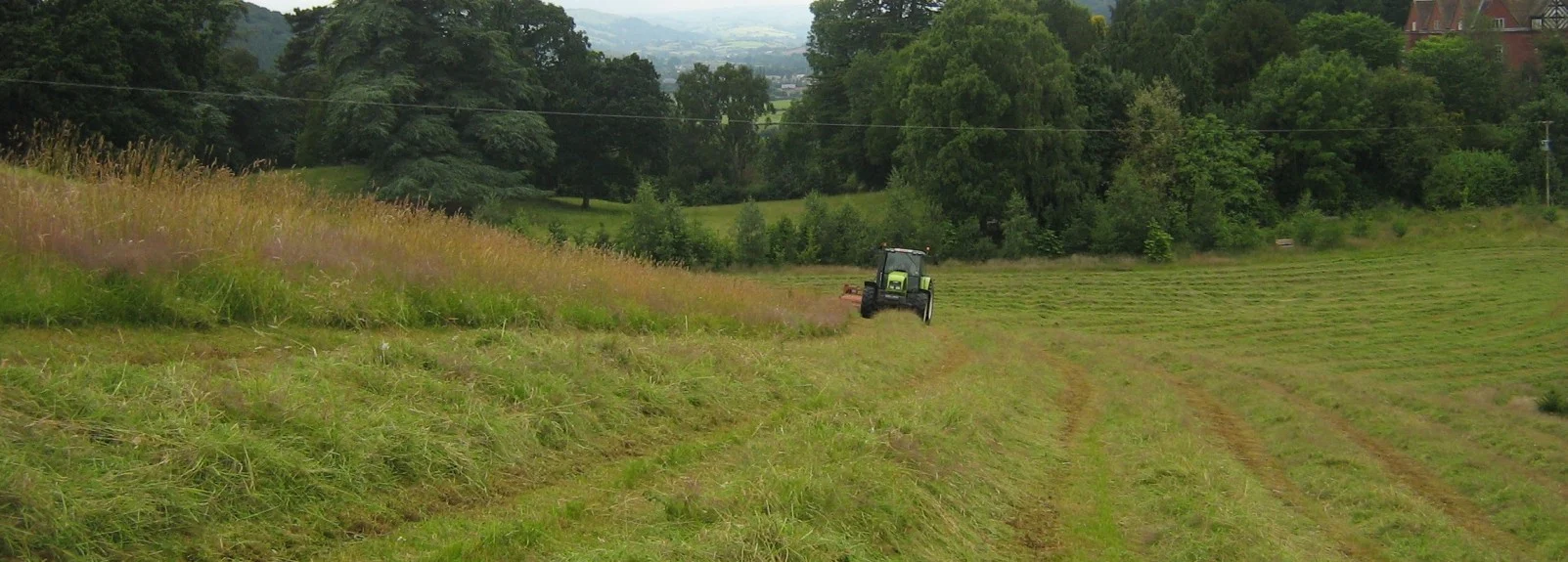
The grassland is managed as a traditional hay meadow. It is cut for hay in July, after meadow flowers have had time to seed and ground-nesting birds have been given space to complete their nesting season.
-
Native flowers
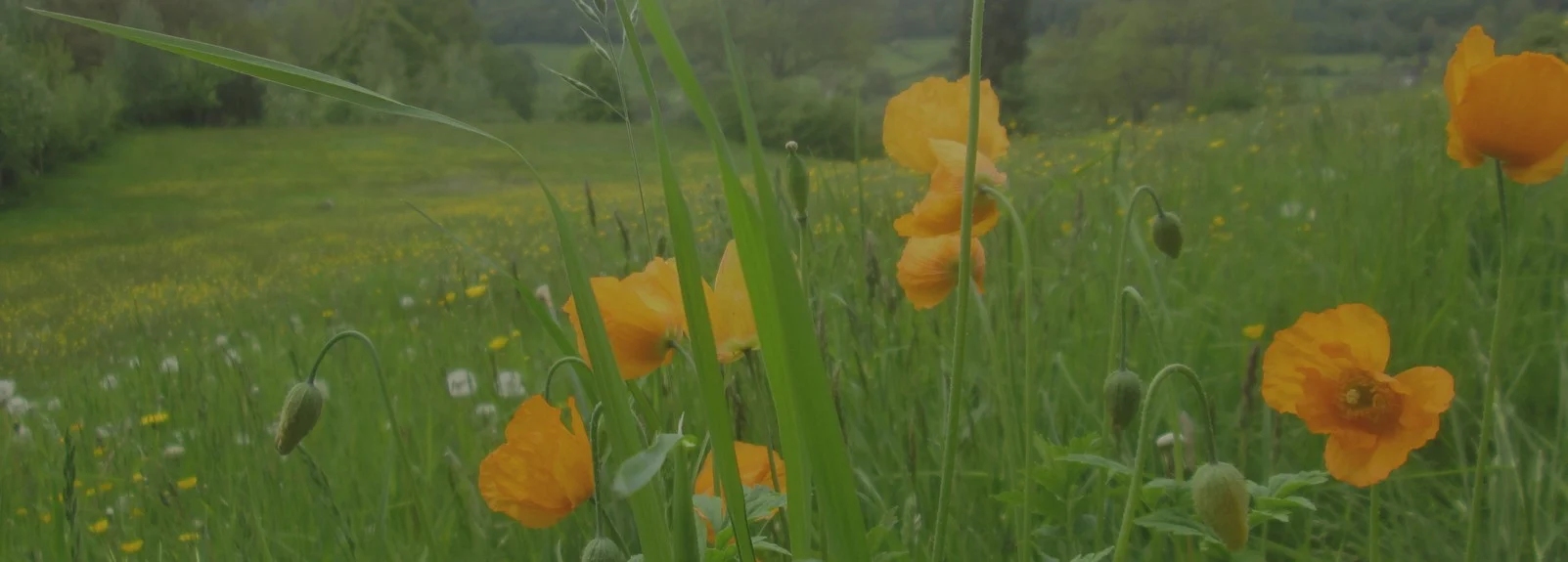
Natural meadow grasses and flowers are encouraged to establish throughout the field. Species found here include yellow rattle, plantain and yarrow, alongside a changing display of seasonal plants.
-
Woodland
Woodland management includes replacing young trees that fail, selective thinning where appropriate and controlling weeds so that new and established native trees can develop successfully.
-
Wildlife
The timing and character of the work are chosen to protect wildlife and strengthen the range of habitats across the burial field, meadow edges and wooded slopes.
Trees and shrubs
A young woodland taking root
Livestock were excluded from the burial field in October 2003. The following January, three thousand trees and shrubs were planted as part of the long-term plan for the site.
The developing woodland is monitored and cared for through replacement planting, selective thinning and weed control. This allows the planting to mature while retaining a balanced, naturally varied landscape.
03 — Through the year
A meadow shaped by the seasons
Spring
Snowdrops, daffodils, wild primroses and fritillaries bring colour to the field as the meadow begins its yearly growth.
Early summer
Grasses and wildflowers are allowed to grow, flower and support insects and birds. Visitors should expect the field to feel natural rather than closely mown.
July
Once the flowers have seeded and birds have nested, the meadow is cut for hay as part of its traditional grassland management.
Later years
Sheep may graze the meadow in future, helping manage the grassland while maintaining the agricultural character of the family-run farm.
04 — Establishment
A long-term commitment to the land.
October 2003
Livestock were excluded from the burial field, allowing its new habitat management to begin.
January 2004
Three thousand trees and shrubs were planted to establish and extend the site’s woodland habitat.
Ongoing
Failed trees are replaced, selected areas are thinned and weeds are controlled while the meadow continues to be managed for hay, wildflowers and wildlife.
Natural burial and responsible land management belong together.
The field will continue to be managed as part of a working farm while its value for plants, birds, insects and other wildlife is protected and improved.
This patient approach allows graves to return naturally to the meadow and helps preserve the calm, rural character of Green Lane for future generations.
Contact
Green Lane Burial Field
- Telephone
- 01686 639638